
ALBANIA ~ Country of Hospitality & History
If our CC13 Global Kin has been keeping up with our adventures via blogs & social media, a humble thank you, if this is your first, Welcome!
We recently returned from a two week road adventure through Greece & Albania, with our hubby. Spending equal amounts of time in each. While not our first trip to Greece (third to be honest) it was our first time in Albania! We were not disappointed. It's hard to describe a country that is so rich in history, culture and hospitality.
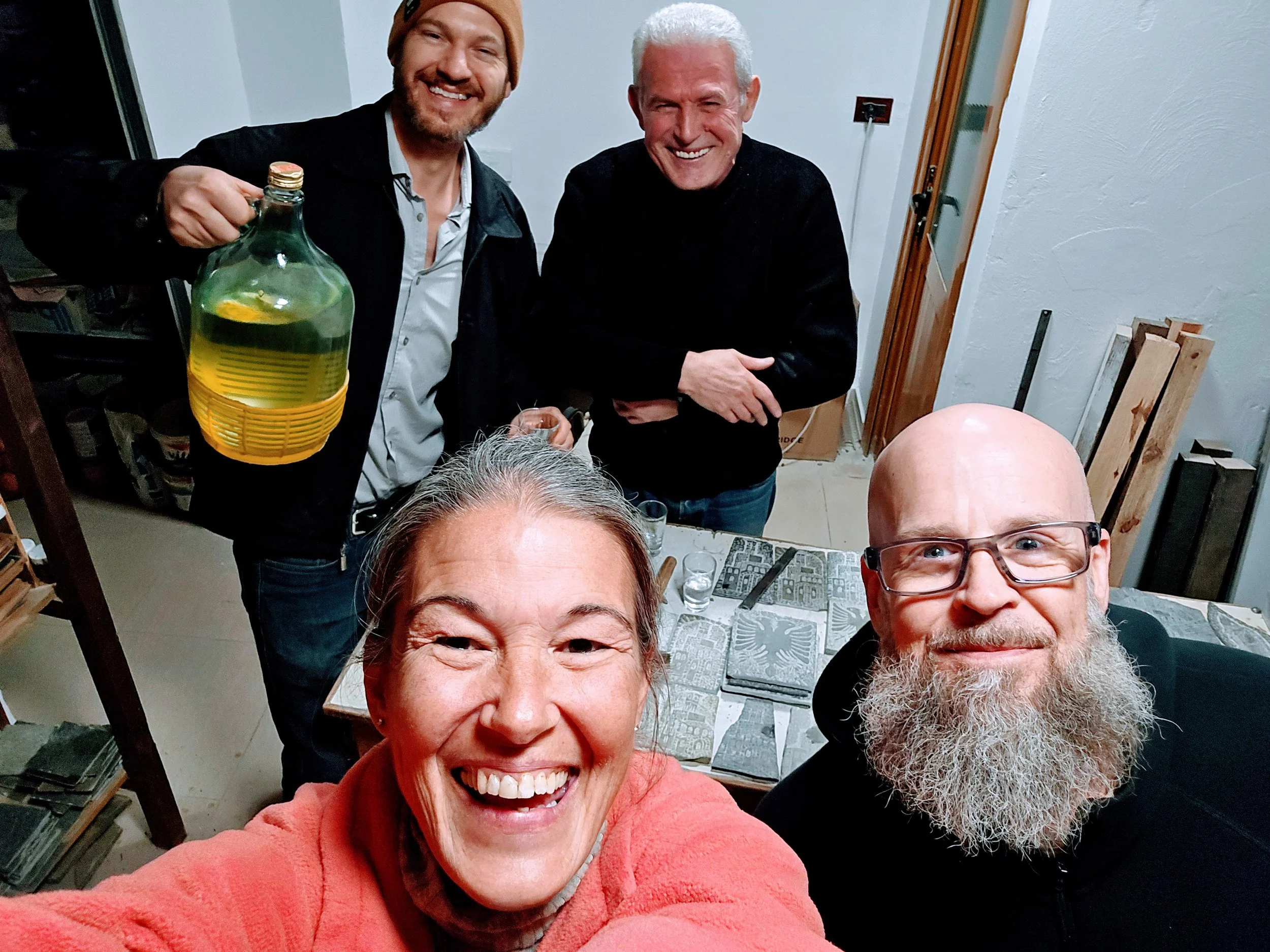
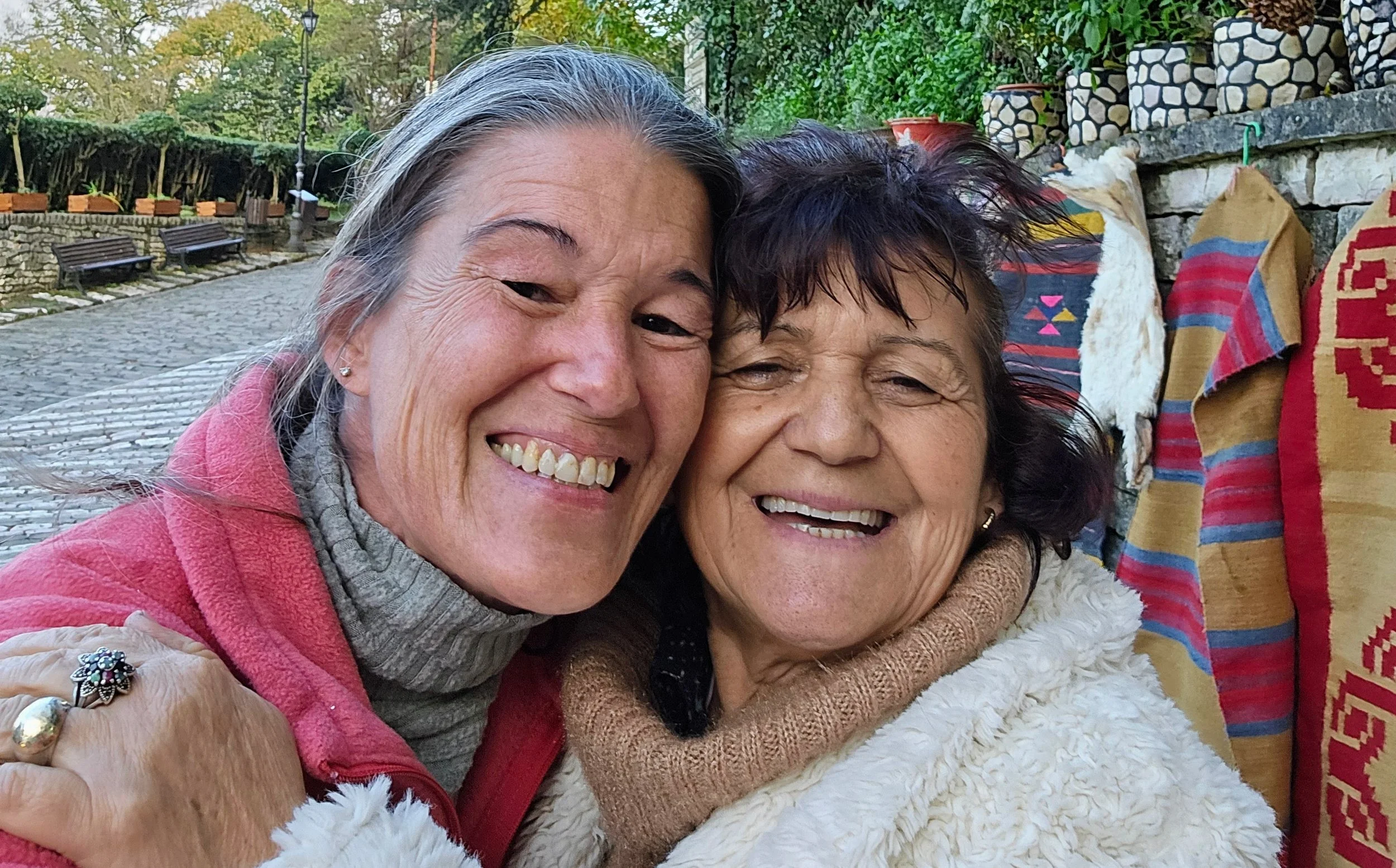
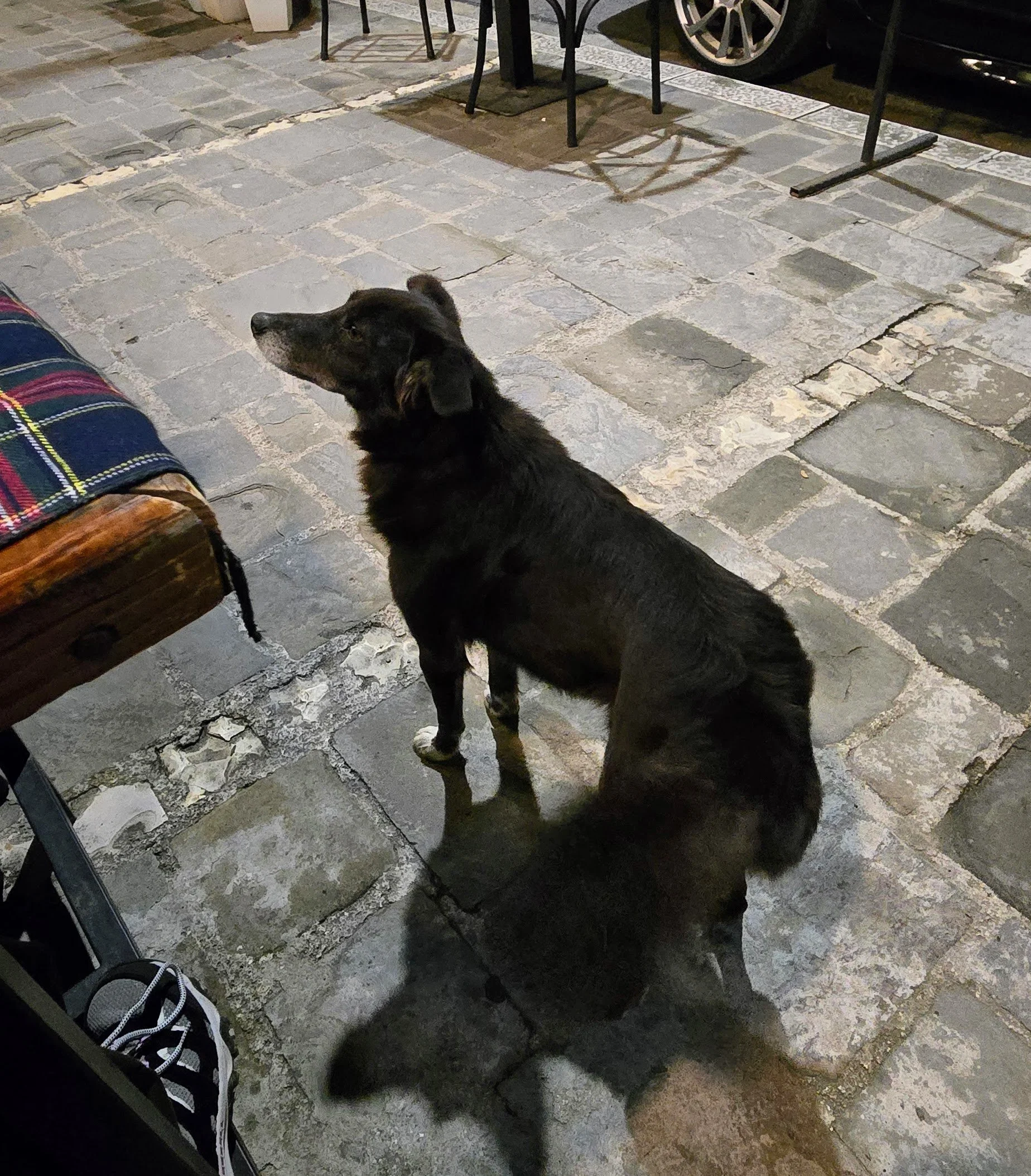
The best place to start, we guess, would be to answer the only question we got asked…
Why Albania? 🙇♀️
Honest truth, the interest first came from The Simpsons and then a deeper fascination grew as our love of ancient civilizations and cultures blossomed. This is also a country that only in recent history has come out of full isolation, gone through their own internal battles to emerge with a deep sense of democracy, hospitality and a tolerance of personalities, opinions and ideas that should make the best of us question our own sense.
Short answer.. Why not Albania?
This is our Alexandrite (rare gem) country. Here is a nation of people that have a long, proud history of hospitality; these are the people and culture that the ancient ones held in high esteem. There is so much to this small county, that a week is just not enough time. Roughly between the size of Vermont and Maryland (bigger than my State of Rhode Island!) .
So where does one began; we will start with a “quick” not so quick, history over view:
HISTORY ~ Mikpritja, Defiant Queens, & Human Decency
To read about this hospitality, known as Mikpritja is a world apart when you actually experience it. This is not your trained or learned tourist pleasing hospitality, that we speak of. It is a truly deeply rooted sense of who they are; as is their word.
Historically, passed down by oral traditions from the Kanun of Lekë Dukagjini, a body of traditional Albanian customary law believed to be codified in the 15th century. However, the principles date back to ancient Illyrian times, which may have coincided with their Mycenaean neighbors, roughly 1200-168 BCE.
Which can be viewed in great works such as Homer’s The Odyssey “One must honor guests and foreigners and strangers, even those much poorer than oneself... What I have to give is small, but I will give it gladly.” ~ Odyssey, Book 14
In the rugged, isolated, and often stateless mountain regions of Albania, Mikpritja (a/k/a Kanun) was not merely a courtesy but a strict, non-negotiable legal and social contract. This was a vital survival mechanism, creating a network of safety and protection for travelers who lacked state authority or shelter, ensuring reciprocal aid in a harsh environment. The landscape of Albania now differs from those of ancient times, but that deeply rooted code does not.
1200 - 168 BCE Illyrian Times
The Illyrians were a group of Paleo-Balkan tribes who inhabited the area from about the Bronze Age. The tribes established influential kingdoms, particularly the Ardiaean Kingdom, which frequently clashed with Greek colonies along the coast and the Roman Republic. One of the most famous in Albania (one of our personal favorites) is Queen Teuta. She became an influential Queen that defied Rome and Greece, who reigned approximately from 231 BCE to 228/227 BCE. One of the most famous figures in Illyrian history who is largely remembered for her bold defiance of the rising Roman Republic, which led to the First Illyrian War. She was the first woman pirate, using this practice as a State Policy, officially sanctioning and supporting the widespread practice. The fast, maneuverable Illyrian ships targeted merchant vessels in the Adriatic and Ionian Seas, extracting tribute and plunder that greatly enriched the kingdom, leading to disruption of riches for the Roman and Greek trade routes. Disrupting the flow of riches, Rome sent ambassadors to Queen Teuta. About 230 BCE, the Roman ambassadors were sent to Illyria to demand an end to the piracy against Roman merchants. Teuta refused naturally, famously arguing that it was "contrary to the custom of the Illyrian kings to hinder their subjects from winning booty from the sea." ~ Queen Teuta, Illyrian Queen 230 BCE
Sparking insult on both sides, Queen Teuta was insulted for having been demanded in her own kingdom & Roman Ambassadors for Teuta not bending to the will of Rome. According to Roman scholars, Queen Teuta was so insulted by the Roman envoys that she had their ships seized, and may even have ordered one of the ambassadors killed. Which is viewed by Rome as a clear justification for war leading to The First Illyrian War (229–228 BCE). Rome declared war, launching a massive invasion force across the Adriatic; the speed and manpower in which the Roman fleet landed, (20,000 troops, 200 cavalry units, and an entire Roman fleet of 200 warships), took the Queen by surprise. Her sights had been sight in the south, in Greece, towards present day Corfu. Furthering complicating things was the betrayal of one of Teuta's key commanders, Demetrius of Pharos, who switched allegiance to the Romans. Although having an initial strong resistance and naval successes, Teuta's forces were ultimately overwhelmed by the disciplined Roman legions.
She not only increased the kingdom by sea but land as well; expanding the Ardiaean Kingdom's influence along the Adriatic coastline, capturing important cities and islands, including the wealthy city of Phoenice in Epirus.
(https://www.guinnessworldrecords.com/news/2025/3/first-female-pirate-queen-forced-the-romans-to-cross-the-seas-to-fight-her Queen Teuta)
Following the Illyrian Wars in the 3rd and 2nd centuries BCE, the region was gradually absorbed into the Roman Empire, where it became an important source of soldiers, trade routes and cultural crossroads of the ancient worlds. While the urban centers were Romanized, the ancestor of the modern Albanian language survived in the mountainous interior, preserving a linguistic link to the ancient Illyrian tongue. After the fall of the Roman Empire, the area became a contested zone under the control of the Byzantine Empire, suffering continuous raids and invasions from Goths, Avars, and Slavs for centuries.
12th Century (High Middle Ages)
During the 12th Century (High Middle Ages) the emergence of the first distinct Albanian feudal states and principalities marked the formation of a recognizable Albanian identity. Peaking in the 15th century with the heroic figure of Gjergj Kastrioti Skanderbeg. He united fragmented noble houses and successfully led a twenty-five-year resistance against the massive expansion of the Ottoman Empire, becoming the national symbol of unified defiance and resistance. Following his death in 1468, the Ottomans did consolidate their conquest, with nearly five centuries of rule. During this Ottoman period, many Albanians converted to Islam. A large-scale emigration occurred, and traditional governance, preserved through customary law like the Kanun, maintained a unique sense of cultural autonomy, especially in the remote northern highlands.
Turn of the Century
The 19th century sparked the Rilindja Kombëtare (National Awakening). An intellectual and political movement focused on forging a unified national consciousness among Albanians—regardless of religious affiliation (Muslim, Orthodox, or Catholic)—through the standardization of the Albanian language and the study of history and folklore. Neighboring states using a pressure campaign seeking to control Albanian-inhabited territories accelerated this nationalist cause, leading to revolts against the Ottoman administration. Finally, at the political moment of the First Balkan War, Albanian leaders declared the nation's independence in Vlorë on November 28, 1912. Sadly, the borders of the new state, defined by the Great Powers (Austro-Hungary, Great Britain, France, German Empire, Russia & Italy) in 1913, controversially left massive Albanian populations, particularly in Kosovo, within the borders of neighboring countries.
With the approach of the 20th Century, Albania was defined by instability, dictatorship, and recovery.
There was a brief period as a monarchy under King Zog before falling on April 7, 1939, Fascist Italy, led by Benito Mussolini. Who invaded and quickly occupied the Kingdom of Albania, forcing King Zog I into exile. Italy annexed Albania, turning it into a de facto Italian protectorate setting up a puppet government. The Italians merged the historically Albanian-populated regions of Kosovo and Western Macedonia into this Italian-controlled territory. Resistance began sporadically but grew significantly after Italy’s failed invasion of Greece in late 1940. The main organized resistance group, National Liberation Movement (NLM), was a communist-led, multi-factional front. When Italy surrendered to the Allies in September 1943, Nazi Germany immediately intervened to occupy Albania. Allowing German established client-state and maintaining the controversial "Greater Albania" borders while gaining collaboration from some nationalist groups, primarily the anti-communist Balli Kombëtar (National Front).
The German occupation was intensely resisted by the NLM, whose strength grew quickly. This resistance evolved into a civil war in some areas between the communist-led partisans and the nationalist/Royalist anti-communist factions. Albania fell under the rigid control of the Communist Party after World War II. Unlike many other occupied nations, Albania was liberated almost entirely by its own forces. The Germans began their final withdrawal in October 1944, and the NLA took control of the capital, Tirana, on November 29, 1944.
Under the authoritarian leadership of Enver Hoxha, the country became internationally famous for its extreme ideological isolationism, breaking ties first with the Soviet Union and then with China, leading to decades of economic stagnation, political repression and complete isolation. Collapse of communism in 1991, Albania began a challenging transition to democracy. A market economy, marred by political instability and the devastating 1997 pyramid scheme crisis almost brought Albania to a breaking point. Today, Albania has stabilized politically and economically, joining NATO in 2009. Receiving candidate status for accession to the European Union, signaling its firm commitment to integration with Western Europe Nations.
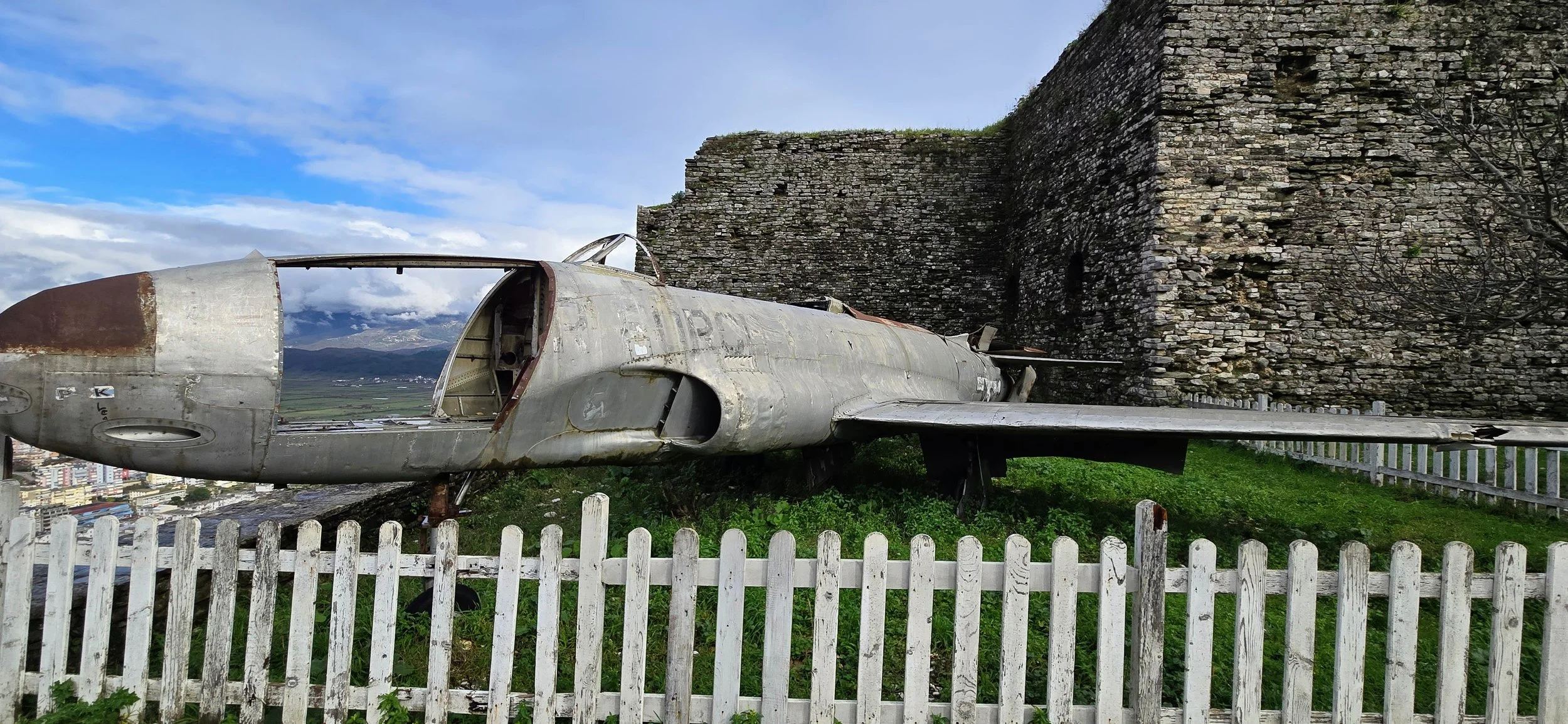
US Air Force plane in Albania from that era is the Lockheed T-33 Shooting Star, an American jet trainer forced down in December 1957, by technical issues or Albanian interception, during the Cold War, now on display in Gjirokastër Castle.
Through all this tumultuous history, conquests, takeovers and isolation; the culture and people of Albania have survived, adapted, and even thrived against all odds throughout history without ever losing their sense of Mikpritja, which was tested to the extreme under the Nazi regime.
“Despite being occupied first by Fascist Italy and then by Nazi Germany, and receiving direct demands to hand over Jewish lists, Albanian authorities and citizens refused to comply. By the war's end, the Jewish population had swelled from an estimated 200–300 people to approximately 2,000, confirming that Albania was the only country in Nazi-occupied Europe that ended the war with a larger Jewish population than it had before." ~Yad Vashem, Israeli Holocaust Memorial Institution
CompassChaos13 Final Thought
This deep sense of human hospitality is front and center today. As Albania enters the 21st Century, the hopes, history and cultural of the people in this hidden gem are on full display no matter what area you choose to find your adventure.
This is one grateful traveler that has experienced this Mikpritja throughout our travels in Albania and will never forget it! Faleminderit shumë (Thank you very much!)
“Live Life Thinking You Will Cease Tomorrow, Plan Your Life Thinking You’re Immortal. The Choices You Have in Front of You TODAY Are the Ones That Matter NOW” ~ Heather Original Quote
🌏💋❤️ Stay Feral, Never Fragile.
Pssst... we have a secret... only CC13 Escapees are privy... hint: (✅ Become an Escapee)
Sign up for our free newsletter 💌 for exclusive access to our best "Trust the Mess" content, travel tips, and adventure stories.
Encourage the Global Connection 👏 to help us keep sharing these unique perspectives. Your support keeps us on the road and delivering valuable, independent content.